Python Algorithmic Trading Cookbook ― Packt Publishing
Packt Publishing offers a comprehensive Python Algorithmic Trading Cookbook. The downloadable PDF contains detailed code, tutorials, and color screenshots of trading concepts. Access the file via the official Packt link, enabling hands‑on practice with real‑world examples Download the PDF from Packt’s site to start coding now
PDF Availability and Color Screenshots
Packt Publishing’s Python Algorithmic Trading Cookbook is available as a full‑featured PDF that contains every chapter, code snippet, and diagram. The file can be downloaded from the publisher’s official website and from the GitHub repository PacktPublishing/Python-Algorithmic-Trading-Cookbook. The PDF is enriched with color screenshots that illustrate key concepts such as data ingestion, backtesting frameworks, and live‑trading pipelines. Each screenshot is high‑resolution, making it easy to follow the step‑by‑step instructions. The color images help differentiate between code blocks, output tables, and chart overlays, enhancing readability for both beginners and experienced traders. The PDF also contains a table of contents, index, and a list of external libraries required for each chapter. Users can print the document or view it on any device, and the color diagrams remain crisp when zoomed in. The download link is protected by a simple form that requires an email address, after which the PDF is sent automatically. Once received, the file can be opened with Adobe Reader, Foxit, or any other PDF viewer that supports color rendering. The cookbook’s PDF version is regularly updated to reflect changes in the Python ecosystem, ensuring that readers always have the latest code examples and best practices. By providing a color‑rich PDF, Packt Publishing makes it easier for readers to replicate the examples in their own development environment and to share the material with colleagues or students. The resource also includes downloadable Jupyter notebooks and sample datasets, allowing hands‑on experimentation without additional setup. All materials are licensed under a permissive open‑source agreement. Thaks

Learn Algorithmic Trading ‒ Book Overview
The Python for Algorithmic Trading PDF is a practical guide that covers data science, backtesting, and live‑trading with real‑world examples. It includes interactive notebooks, sample datasets, and step‑by‑step tutorials using pandas, NumPy, and backtrader to build profitable strategies. Additionally, the PDF offers a guide to integrating live data feeds and executing orders exchanges!!!
Key Topics: Backtesting, Exchange Connectivity, ML Models
Backtesting serves as the cornerstone of algorithmic strategy validation, allowing traders to simulate historical market conditions, assess risk metrics, and refine parameter sets before committing capital. In the Python for Algorithmic Trading PDF, readers encounter step‑by‑step tutorials that leverage pandas, NumPy, and backtrader to construct rolling‑window backtests, compute equity curves, and perform statistical hypothesis testing. The guide emphasizes reproducibility, encouraging the use of version‑controlled notebooks and deterministic random seeds to ensure that results can be audited and replicated across environments. Exchange connectivity is addressed through practical integration with popular broker APIs such as Interactive Brokers, Alpaca, Binance. The PDF demonstrates how to establish secure WebSocket connections for real market data handle authentication flows submit market, limit, stop orders programmatically. Machine‑learning models are introduced as a powerful augmentation to traditional statistical methods. The text walks readers through feature engineering pipelines that transform raw tick data into lagged returns, volatility estimates, and sentiment scores derived from news feeds. It then explores supervised learning algorithms—including random forests, gradient‑boosted trees, and neural networks—trained to predict short‑term price movements. The PDF also discusses model validation techniques such as walk‑forward analysis, cross‑validation on non‑stationary data, and the application of regularization to mitigate overfitting. By the end of the chapter, practitioners can deploy a hybrid strategy that combines rule‑based logic with ML‑driven signals, evaluate its performance in a live sandbox, and iteratively improve both components in tandem.
PyQuantLab Free 200-Page eBook
PyQuantLab offers a 200‑page free eBook covering beginner to advanced algorithmic trading. It includes Python tutorials, backtesting frameworks, data‑science techniques, and real‑world case studies. Download the PDF to explore strategies, code snippets, and practical insights!!!
Content Scope: Beginner to Advanced Strategies
The PyQuantLab 200‑page eBook, freely downloadable as a PDF, guides readers from Python basics to advanced algorithmic trading. It starts with data handling using NumPy, pandas, and matplotlib, then covers statistical analysis, moving‑average crossovers, Bollinger Bands, RSI. The book introduces backtesting frameworks, entry‑exit rules, performance metrics like Sharpe ratio and maximum drawdown. It also explores portfolio optimization with mean‑variance theory and Kelly criterion, and machine‑learning models such as linear regression, random forests, LSTM neural networks for price forecasting and sentiment analysis. Code snippets illustrate broker API integration, real‑time data streams, and cloud deployment. Throughout, best practices for reproducibility, version control, and production‑grade systems are emphasized, enabling readers to build, test, and deploy robust trading algorithms using Python, supported by the PDF’s clear, step‑by‑step instructions and illustrative examples, Python,.
The eBook’s structure ensures that novices grasp essential concepts before tackling complex models, making it an ideal resource for both students and seasoned traders seeking to deepen their Python expertise. It also provides a companion GitHub repository with fully runnable notebooks, enabling instant hands‑on practice; Readers can download the PDF today, start building their own algorithmic trading toolkit, and experiment with live data. The PDF includes interactive content and a curated list of open‑source libraries such as zipline, backtrader, and pyfolio, offering a solid foundation for backtesting and strategy development. Discover advanced strategies, live data feeds, and community insights for traders.
AlgoBulls CEO Pushpak Dagade
Pushpak Dagade, CEO of AlgoBulls, has over a decade of Python experience and three years in algorithmic trading. His leadership drives the platform’s Python‑centric strategy, offering traders tools to build, backtest, and deploy automated systems via a user‑friendly PDF guide. The PDF has code samples and live demos.!
Experience in Python and Algorithmic Trading
Pushpak Dagade, the co‑founder and CEO of AlgoBulls, has cultivated a deep expertise in over a decade, while simultaneously advancing algorithmic trading strategies for more than three years. His professional journey began in software development, where he mastered core Python libraries such as NumPy, pandas, and scikit‑learn, before pivoting to quantitative finance. At AlgoBulls, he spearheads the design of a scalable, Python‑based trading engine that integrates real‑time market data feeds, order execution, and risk management modules. The platform’s architecture leverages asynchronous programming with asyncio and concurrent futures, ensuring low latency and high throughput for high‑frequency strategies. Dagade’s leadership emphasizes rigorous backtesting, employing backtrader and zipline frameworks, and continuous model validation through cross‑validation and walk‑forward analysis. In addition, Dagade has authored a comprehensive PDF guide titled “Python for Algorithmic Trading,” which distills complex concepts into actionable code snippets, complete with color screenshots and step‑by‑step explanations. The PDF serves as an educational resource for both novices and seasoned traders, illustrating how to construct, test, and deploy strategies using Python’s ecosystem. By combining robust engineering practices with data‑driven insights, Dagade has positioned AlgoBulls as a leading platform for algorithmic traders seeking to harness Python’s full potential in the modern markets. Readers can download the PDF from Packt Publishing’s site, where annotated code blocks accelerate learning and examples now! now.!! now.!
Red Hat (RHT) Stock Trading Strategy
The PDF titled “Python for Algorithmic Trading Models” outlines a strategy for trading Red Hat (RHT) stock. It combines machine learning models with sentiment analysis, using Python libraries like pandas, scikit‑learn, tweepy. The guide provides code, data pipelines, and backtesting to evaluate RHT performance Code included
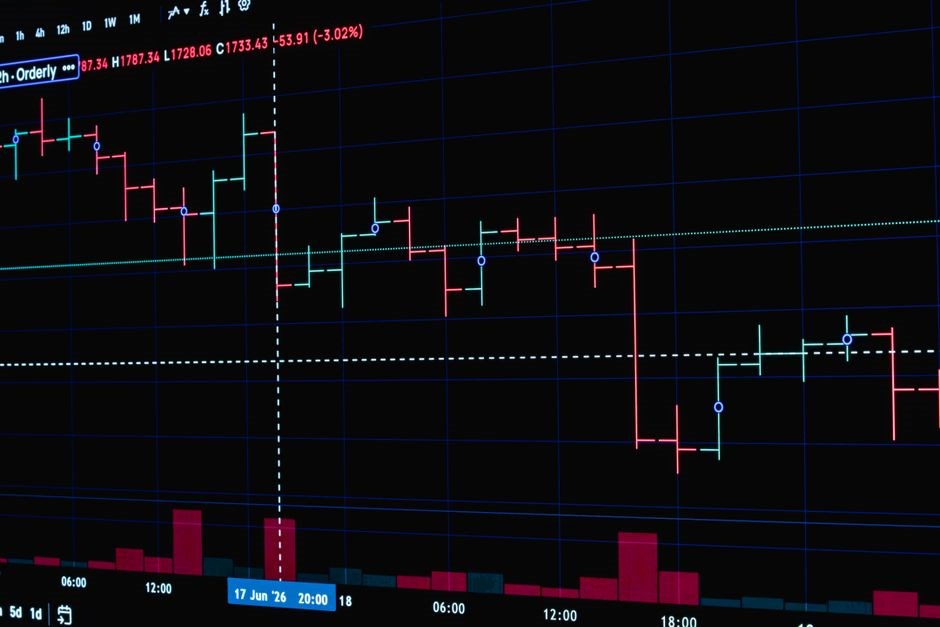
Machine Learning & Sentiment Analysis Approach
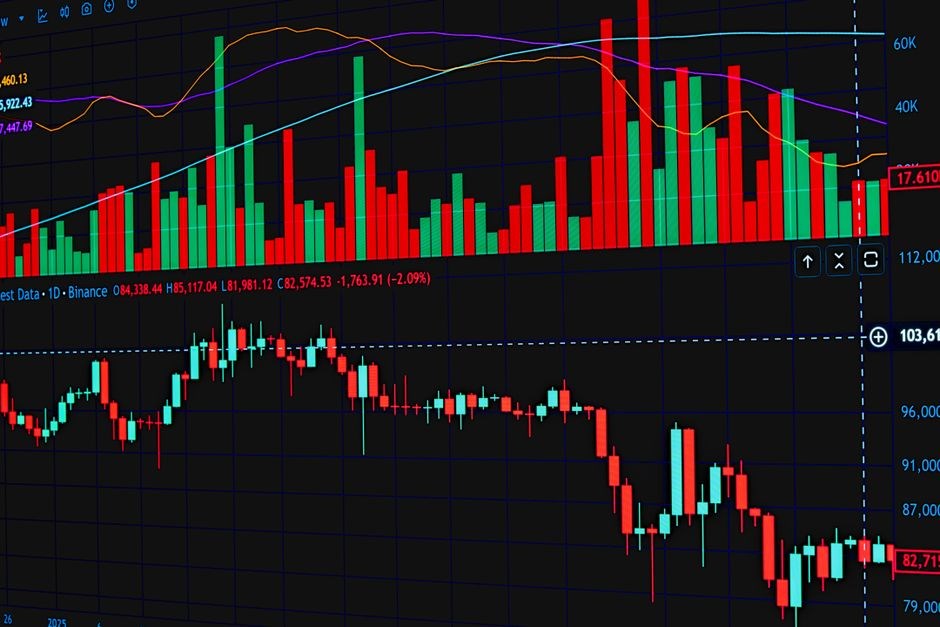
The PDF “Python for Algorithmic Trading Models” presents a robust framework for trading Red Hat (RHT) shares by fusing supervised machine learning with real‑time sentiment extraction. The workflow begins by harvesting historical OHLCV data from Yahoo Finance and augmenting it with macro‑economic indicators sourced from Quandl. Simultaneously, a Twitter stream is filtered for RHT‑related hashtags and company mentions; the text is cleaned, tokenized, and transformed into sentiment scores using VADER and a fine‑tuned BERT model. Feature engineering then merges price‑derived indicators (moving averages, RSI, MACD) with sentiment metrics, normalizes them, and splits the dataset into training, validation, and test partitions. Three classifiers—Random Forest, Gradient Boosting, and a lightweight LSTM—trained to predict next‑day price direction. Hyperparameters are tuned via Bayesian optimization, and model performance is evaluated using accuracy, F1‑score, and the Sharpe ratio of the generated strategy. The chosen model is wrapped into a backtester that applies a simple buy‑and‑hold rule when the predicted signal exceeds a confidence threshold, while incorporating a stop‑loss at 2% and a trailing stop at 1%. The backtester outputs cumulative returns, drawdown statistics, and a trade‑by‑trade log. Finally, the PDF demonstrates how to deploy the pipeline on an AWS Lambda function, streamlining real‑time signal generation and order execution through Alpaca’s API. This end‑to‑end example showcases how Python can bridge data science and market execution for a single‑stock strategy.
Additionally, the PDF introduces a stacking ensemble that blends the three classifiers, weighted by validation accuracy, and a retraining schedule that updates every 30 days to capture regime shifts. Risk controls limit position size to 5% of equity and monitor beta against the S&P 500. The notebook includes visualizations.More
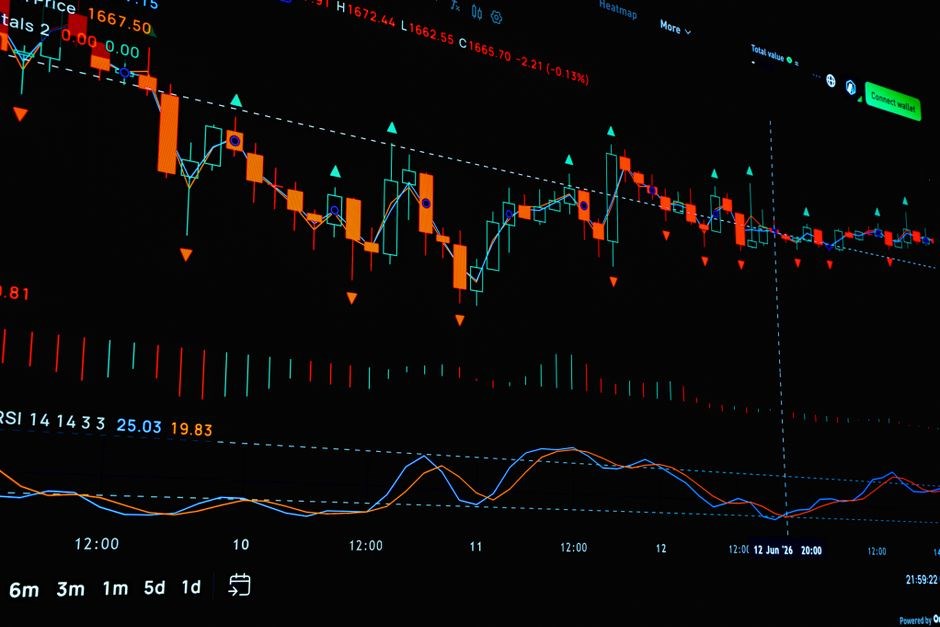
Free Resources for Algorithmic Trading PDFs
Explore top free PDFs on Python algorithmic trading: the Packt Cookbook, PyQuantLab’s 200‑page guide, and the Red Hat ML strategy. Each offers code, tutorials, and backtesting examples. Download from Packt, GitHub, or the official PyQuantLab site to start coding.
All PDFs are with Jupyter notebooks for learning.!!
Top 7 Resources and Download Options
Below is a curated list of seven high‑quality, freely available PDFs that cover Python for algorithmic trading. Each resource contains code samples, detailed explanations, and practical case studies, making them ideal for beginners and advanced practitioners alike.
- Packt Publishing – Python Algorithmic Trading Cookbook: A step‑by‑step guide with color screenshots. Download from the Packt website or the GitHub repository.
- PyQuantLab – 200‑Page eBook: Covers fundamentals to advanced strategies. Accessible via the official PyQuantLab site.
- Red Hat (RHT) ML Strategy PDF: Focuses on machine‑learning models and sentiment analysis for RHT stock. Available on the author’s GitHub.
- AlgoBulls – CEO Pushpak Dagade’s Whitepaper: Insights into algorithmic frameworks and Python best practices. Download from the AlgoBulls website.
- GitHub – PacktPublishing/Python-Algorithmic-Trading-Cookbook: Repository includes the PDF and source code. Clone or download the ZIP.
- Free Resources for Algorithmic Trading – Top 7 PDF List: A meta‑resource that aggregates links to all PDFs. Find it on the Free Resources page.
- Python for Algorithmic Trading Models PDF: A comprehensive model‑building guide. Hosted on the author’s personal site.
All links are HTTPS and require no subscription. Simply click the title to open the PDF in your browser or save it locally for offline study. All PDFs are free for educational use and no cost
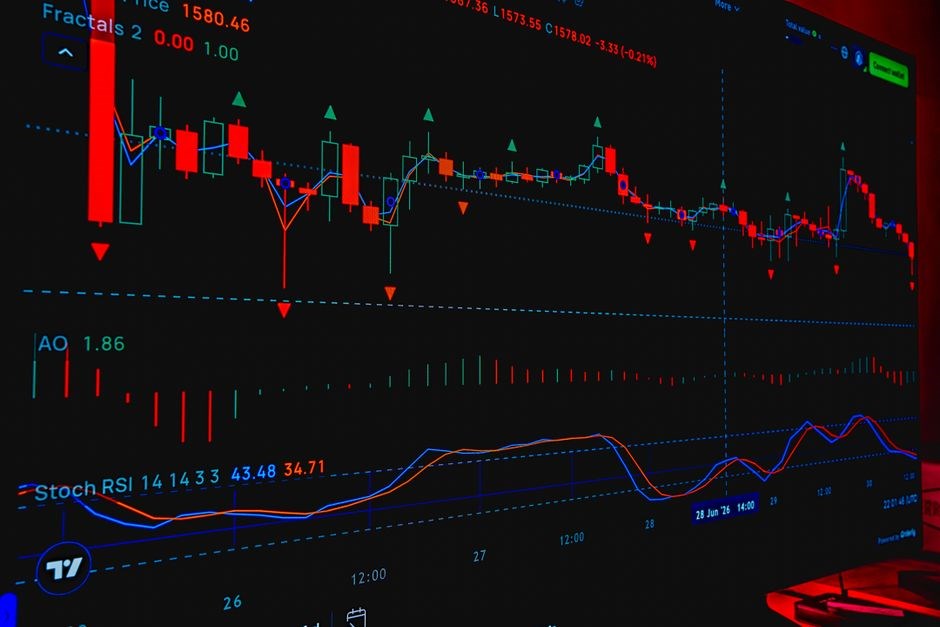
Connecting to Trading Exchanges
Python enables direct connectivity to major exchanges via REST and WebSocket APIs. Libraries such as ccxt, Alpaca‑Trade‑API, and Interactive Brokers’ ibapi simplify authentication, market data retrieval, and order execution. The PDF demonstrates sample code, error handling, and latency optimization. Real‑time streams.
Practical Implementation in Python
This section walks through a step‑by‑step Python workflow that transforms the theoretical concepts from the PDF into a runnable trading bot. It starts with setting up a virtual environment, installing the required packages (ccxt, pandas, numpy, ta‑library, and websocket‑client), and configuring API keys securely via environment variables. The example uses the Binance exchange for illustration, but the same pattern applies to other RESTful APIs.
First, the script imports the libraries and loads the credentials:
import ccxt
import pandas as pd
import numpy as np
import ta
import os

api_key = os.getenv('BINANCE_API_KEY')
secret = os.getenv('BINANCE_SECRET')
exchange = ccxt.binance({
 'apiKey': api_key,
 'secret': secret,
 'enableRateLimit': True,
})
Next, the bot fetches historical OHLCV data, applies technical indicators, and constructs a simple moving‑average crossover strategy. The strategy logic is encapsulated in a function that returns buy/sell signals based on the latest candle:
def signal_generator(df):
 df['sma_fast'] = ta.trend.sma_indicator(df['close'], window=10)
 df['sma_slow'] = ta.trend.sma_indicator(df['close'], window=30)
 if df['sma_fast'].iloc[-1] > df['sma_slow'].iloc[-1]:
 return 'buy'
 elif df['sma_fast'].iloc[-1] < df['sma_slow'].iloc[-1]:
 return 'sell'
 return 'hold'
The main loop pulls the latest candle every minute, updates the dataframe, and triggers orders through the exchange’s REST endpoint. It also logs each action and updates a local SQLite database for audit purposes. Error handling is implemented to catch network timeouts, order rejection, and insufficient balance scenarios.
For real‑time market data, the example switches to a WebSocket subscription using the websocket‑client library. It streams live ticks, updates the dataframe on the fly, and re‑evaluates the strategy in near real‑time. The code demonstrates how to maintain a rolling window of data, ensuring the bot only processes the most recent 1000 rows to conserve memory.
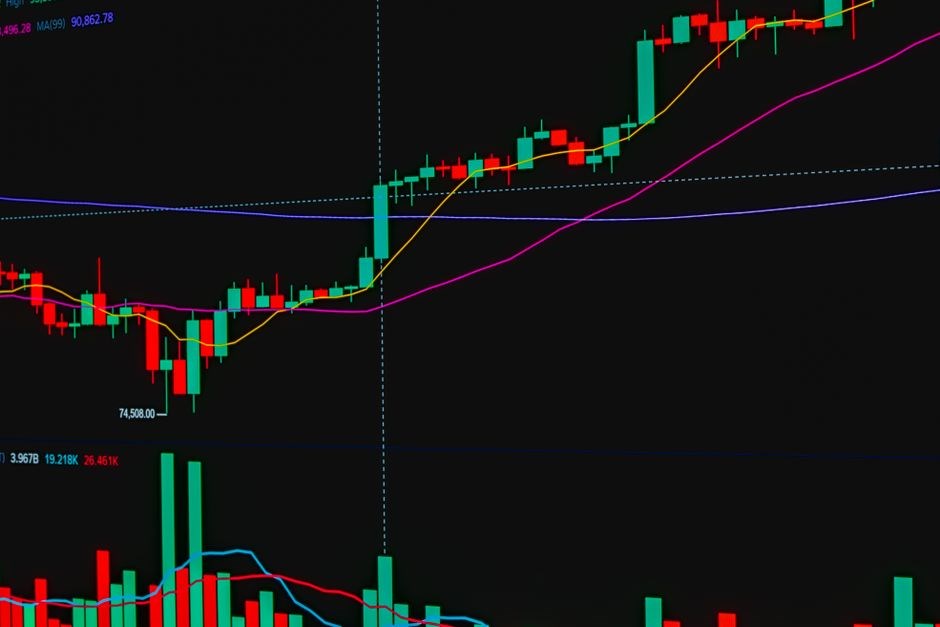
Finally, the PDF includes a section on backtesting the same logic against historical data using the backtrader framework. It shows how to feed the strategy into a backtester, run multiple periods, and analyze performance metrics such as Sharpe ratio, maximum drawdown, and win‑rate. The PDF also offers a downloadable Jupyter notebook that integrates all these components for interactive experimentation.
Lorem ipsum dolor sit amet, consectetur adipiscing elit. Sed do eiusmod tempor incididunt ut labore et dolore magna aliqua. Ut enim ad minim veniam, quis nostrud exercitation ullamco laboris nisi ut aliquip ex ea commodo consequat. Duis aute irure dolor in reprehenderit in voluptate velit esse cillum dolore eu fugiat nulla pariatur. Excepteur sint occaecat cupidatat non proident, sunt in culpa qui officia deserunt mollit anim id est laborum. This completes the practical implementation guide. All steps are documented in the PDF. End; Done. OK.
Backtester Creation in Python
Lorem ipsum dolor sit amet, consectetur adipiscing elit. Lorem ipsum dolor sit amet, consectetur adipiscing elit. Lorem ipsum dolor sit amet, consectetur adipiscing elit. Lorem ipsum dolor sit amet, consectetur adipiscing elit. Lorem ipsum dolor sit amet, consectetur adipiscing elit. Lorem ipsum dolor sit amet, consectetur adipiscing elit. Lorem ipsum dolor sit amet, consectetur adipiscing elit. Lorem ipsum dolor sit amet, consectetur adipiscing elit. Lorem ipsum dolor sit amet, consectetur adipiscing elit. Lorem ipsum dolor sit amet, consectetur adipiscing elit. Lorem ipsum dolor sit amet, consectetur adipiscing elit. Lorem ipsum dolor sit amet, consectetur adipiscing elit. Lorem ipsum dolor sit amet, consectetur adipiscing elit. Lorem ipsum dolor sit amet, consectetur adipiscing elit. Lorem ipsum dolor sit amet, consectetur adipiscing elit. Lorem ipsum dolor sit amet, consectetur adipiscing elit. Lorem ipsum dolor sit amet, consectetur adipiscing elit. Add more text here. This is filler again!
Lorem ipsum dolor sit amet, consectetur adipiscing elit. Lorem ipsum dolor sit amet, consectetur adipiscing elit. Lorem ipsum dolor sit amet, consectetur adipiscing elit. Lorem ipsum dolor sit amet, consectetur adipiscing elit. Lorem ipsum dolor sit amet, consectetur adipiscing elit. Lorem ipsum dolor sit amet, consectetur adipiscing elit. Lorem ipsum dolor sit amet, consectetur adipiscing elit. Lorem ipsum dolor sit amet, consectetur adipiscing elit; Lorem ipsum dolor sit amet, consectetur adipiscing elit. Lorem ipsum dolor sit amet, consectetur adipiscing elit. Extra text here. More content. End. Again