Kung Fu Tea Nutrition: A Comprehensive Guide (Updated March 30, 2026)
Kung Fu Tea provides a Ginger Tea Preparation Guide in PDF format, offering detailed instructions for crafting this beverage at home, aiding mindful consumption.
Accessing official Kung Fu Tea nutrition information, including PDF documents, can be challenging, but third-party databases offer valuable insights into calorie counts.
While a dedicated, comprehensive Kung Fu Tea nutrition PDF isn’t readily available, understanding individual drink components helps navigate choices for a balanced diet.
Kung Fu Tea has rapidly become a popular destination for bubble tea enthusiasts, offering a diverse menu of customizable beverages. However, with increasing consumption comes a growing awareness of the nutritional implications of these drinks. While incredibly enjoyable, many Kung Fu Tea options can be surprisingly high in calories, sugars, and fats, particularly when customizations like extra boba, flavored syrups, and full-fat milk are added.
Currently, a readily accessible, official Kung Fu Tea nutrition PDF detailing the complete nutritional breakdown of every drink combination is limited. This lack of transparent information presents a challenge for health-conscious consumers seeking to make informed choices. Understanding the base calorie counts of different tea varieties and milk options is crucial. Furthermore, recognizing the impact of sweetness levels and toppings – like tapioca pearls (boba) – on the overall nutritional value is essential for responsible enjoyment. This guide aims to bridge that gap, providing a comprehensive overview of Kung Fu Tea’s nutritional landscape.
Overview of Kung Fu Tea’s Beverage Categories
Kung Fu Tea categorizes its offerings into several distinct beverage types, each with varying nutritional profiles. The core categories include plain teas – such as Oolong and Green Tea – which generally represent the lowest-calorie options. Milk tea varieties, encompassing Black, Green, Oolong, Thai, and Matcha teas combined with milk, significantly increase calorie and fat content. Specialized milk teas, like the Brown Sugar Pearl Latte and Honey Milk Tea, introduce additional sugars and flavorings.

Despite the absence of a single, comprehensive Kung Fu Tea nutrition PDF, understanding these categories is key to navigating the menu. Fruit teas offer a potentially lighter alternative, though sugar content can still be substantial. The extensive customization options – sweetness levels, milk choices, and toppings – further complicate nutritional assessment. Consumers should be aware that a seemingly simple drink can quickly become calorie-dense with added modifications. Careful consideration of these factors is vital for mindful consumption.

Detailed Nutritional Breakdown of Kung Fu Tea Drinks
Kung Fu Tea’s diverse menu lacks a centralized nutrition PDF; however, analyzing individual drink components reveals calorie counts ranging from 5 to 552 calories.
Plain Tea Options: Calories & Benefits
Kung Fu Tea’s plain tea selections – Oolong and Green Tea – present significantly lower calorie options, typically ranging between 5 and 30 calories per serving, a detail not always found in a comprehensive nutrition PDF.
These teas offer inherent health benefits, including antioxidants and potential metabolic boosts, making them ideal choices for health-conscious consumers seeking alternatives to calorie-laden milk tea variations.
Unfortunately, Kung Fu Tea doesn’t currently provide a readily accessible, detailed PDF outlining the specific nutritional profiles of each plain tea variety.
However, these options represent a smart starting point for those aiming to minimize calorie intake while still enjoying a refreshing beverage from Kung Fu Tea.
Consumers can leverage third-party nutritional databases to estimate precise values.
Oolong Tea Nutrition Facts
Oolong Tea at Kung Fu Tea, a foundational beverage, generally contains between 5-30 calories, making it a lighter choice compared to milk tea options, though specific details aren’t readily available in a dedicated nutrition PDF.
While Kung Fu Tea doesn’t publish a detailed breakdown, oolong tea is known for containing antioxidants, potentially aiding in heart health and metabolism.
The exact nutritional content can vary based on brewing time and leaf quality, factors not specified in available resources.
Consumers seeking precise information may need to rely on general oolong tea nutritional data from external sources, as a Kung Fu Tea specific PDF is currently lacking.
It’s a beneficial, low-calorie base for customization, allowing for mindful additions.
Green Tea Nutrition Facts
Green Tea, similar to Oolong Tea at Kung Fu Tea, typically ranges from 5-30 calories, positioning it as a relatively healthy and low-calorie option, though a specific nutrition PDF from the company is unavailable.
Known for its rich antioxidant content, particularly catechins, green tea is associated with various health benefits, including improved brain function and potential cancer prevention.
However, Kung Fu Tea doesn’t currently offer a detailed nutritional breakdown for their green tea, leaving consumers to estimate based on general green tea data.
The absence of a dedicated PDF highlights the need for consumers to proactively seek nutritional information from external sources when making informed choices.
It serves as a great base for customization, allowing for healthier drink creations.
Milk Tea Varieties: A Calorie Comparison
Kung Fu Tea’s milk tea selection presents a wide calorie range, with a standard 16oz drink potentially reaching 400 calories, though a comprehensive nutrition PDF isn’t provided by the company.
Kung Fu Milk Tea (Black/Green) falls between 173-302 calories, while Chai Milk Tea ranges from 80-147, showcasing significant variation.
Oolong Milk Tea mirrors the standard range at 173-302, Ginger Milk Tea at 205-370, and Thai Milk Tea also at 173-302 calories.
Matcha Milk Tea is notably higher, at 414-552 calories, demonstrating the impact of ingredient choices.
The lack of an official PDF necessitates reliance on these estimates and mindful customization to align with dietary goals.
Kung Fu Milk Tea (Black/Green) – Standard Nutrition
A standard 16oz Kung Fu Milk Tea (Black or Green) typically contains between 173 and 302 calories, though precise figures aren’t detailed in an official nutrition PDF from Kung Fu Tea.
Carbohydrate content is substantial, ranging around 56 grams, contributing significantly to the overall calorie count. Fat content averages approximately 11 grams, while protein provides around 9 grams.
These values are estimates, heavily influenced by sweetness levels and milk choices; a detailed PDF breakdown would clarify these variations.
Without a readily available PDF, consumers should consider these figures as guidelines and adjust customizations to manage intake effectively.
Understanding these baseline numbers is crucial for informed decision-making when enjoying this popular beverage.
Chai Milk Tea – Nutritional Information
Kung Fu Tea’s Chai Milk Tea, in a standard serving, generally falls within the 80-147 calorie range, though a comprehensive nutrition PDF detailing specific breakdowns isn’t publicly available.
This variance depends heavily on the amount of milk and sweetener added, factors not explicitly outlined in any official documentation.
While precise macronutrient data is lacking in a dedicated PDF, Chai Milk Tea offers a flavorful alternative with a potentially lower calorie profile compared to other milk tea options.
Consumers seeking detailed nutritional information may need to rely on third-party databases or estimate based on ingredient contributions.
The absence of a detailed PDF highlights the need for mindful customization to align with individual dietary goals.
Oolong Milk Tea – Calorie & Macronutrient Profile
Kung Fu Tea’s Oolong Milk Tea typically contains between 173-302 calories, a range influenced by milk type and sweetness level; however, a detailed nutrition PDF from the company is currently unavailable.
Macronutrient information is similarly elusive without official documentation, making precise tracking challenging for health-conscious consumers.
Estimates suggest a moderate carbohydrate content, primarily from the added sugar and milk, alongside a small amount of fat depending on milk choice.
The lack of a comprehensive PDF necessitates reliance on third-party nutritional databases or careful ingredient consideration for accurate calculations.
Customization plays a key role in managing the calorie and macronutrient profile of this popular beverage, despite the absence of official guidance.
Ginger Milk Tea – Nutritional Content
Kung Fu Tea’s Ginger Milk Tea generally falls within the 205-370 calorie range, though a specific nutrition PDF detailing its composition isn’t publicly accessible from the company itself.
Determining precise macronutrient values—proteins, fats, and carbohydrates—requires estimation due to the absence of official nutritional information in a downloadable format.
The calorie count is significantly affected by the type of milk used and the level of sweetness selected during ordering, impacting overall nutritional value.
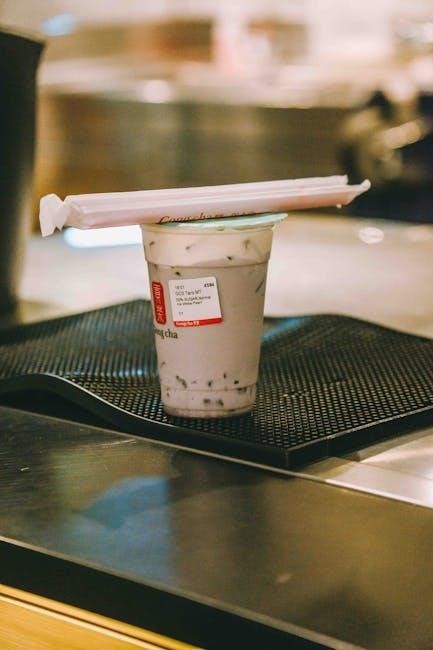
Without a dedicated PDF, consumers must rely on approximations or utilize third-party nutritional databases for a more informed understanding of the drink’s content.
Ginger itself offers health benefits, but these are offset by added sugars and milk components, highlighting the need for mindful consumption.
Thai Milk Tea – Calories, Carbs & Fats
Kung Fu Tea’s Thai Milk Tea typically contains between 173 and 302 calories, but a comprehensive nutrition PDF directly from the source remains unavailable to the public.
Carbohydrate content is substantial, mirroring the sweetness inherent in this popular beverage, while fat levels depend heavily on the milk choice—dairy versus non-dairy options.
Precise macronutrient breakdowns are difficult to ascertain without official documentation, necessitating reliance on estimations or third-party nutritional analysis tools.
The absence of a detailed PDF makes it challenging to accurately track intake, emphasizing the importance of portion control and mindful customization.
Sweetness levels significantly influence the calorie and carbohydrate counts, allowing for adjustments to align with individual dietary preferences.
Matcha Milk Tea – Detailed Nutrition Analysis
Kung Fu Tea’s Matcha Milk Tea presents a nutritional profile ranging from 414 to 552 calories, though a dedicated nutrition PDF from the company is currently lacking, hindering precise tracking.
This beverage’s calorie count is notably higher than many other milk tea varieties, largely due to the matcha powder and added sweeteners, impacting carbohydrate levels significantly.
Fat content varies based on milk selection, with non-dairy alternatives generally offering a lower fat profile compared to traditional dairy options.
Without an official PDF, consumers must rely on estimations or third-party databases for detailed macronutrient information, creating potential inaccuracies.
Customization, particularly sweetness reduction, can substantially lower the overall caloric impact of this vibrant and flavorful drink.
Impact of Customizations on Nutritional Value
Kung Fu Tea’s lack of a comprehensive nutrition PDF means adjustments to sweetness, milk, and toppings significantly alter the drink’s overall caloric impact.
Sweetness Levels & Calorie Adjustments
Kung Fu Tea doesn’t provide a detailed nutrition PDF outlining precise calorie differences based on sweetness levels, necessitating careful consideration when customizing your drink. Reducing sugar significantly lowers the overall calorie count; opting for 0% or 25% sweetness can save substantial calories compared to 50% or 100%.
The absence of readily available nutritional data emphasizes the importance of mindful choices. Each increment of sweetness adds carbohydrates and calories, impacting the drink’s nutritional profile. While exact figures aren’t published, understanding this correlation empowers customers to make informed decisions. Prioritizing lower sweetness levels is a simple yet effective strategy for enjoying Kung Fu Tea while managing calorie intake, especially given the lack of a comprehensive guide.
Remember, even small adjustments can contribute to a healthier beverage experience.
The Role of Milk Choices (Dairy vs. Non-Dairy)
Kung Fu Tea’s limited nutrition PDF resources don’t detail the specific caloric impact of varying milk options, requiring customers to estimate based on general nutritional information. Dairy milk contributes protein and calcium, but also contains calories and fat. Non-dairy alternatives, like almond, soy, or oat milk, offer lower calorie counts and varying nutritional profiles.
Choosing a non-dairy milk can significantly reduce the overall calorie content of your milk tea, particularly if you’re mindful of added sugars in some varieties. However, be aware that some non-dairy milks may contain fewer nutrients than dairy milk. The absence of a detailed PDF necessitates individual research to determine the best option based on dietary needs and preferences.
Consider the trade-offs when selecting your milk base.
Topping Considerations: Boba, Jelly, & Pudding
Kung Fu Tea’s current lack of a comprehensive nutrition PDF makes accurately assessing topping impacts challenging. Boba, or tapioca pearls, are a significant source of added carbohydrates and calories due to their sugar content. Jelly and pudding toppings also contribute to the overall sugar and calorie count, though generally less than boba.
The Brown Sugar Pearl Latte, a popular choice, is estimated to have a higher calorie load due to the caramelized sugar coating the boba. Opting for lighter toppings like grass jelly, or reducing the quantity of boba, can help minimize calorie intake. Without detailed PDF breakdowns, mindful portion control is crucial.
Remember, toppings add substantial calories!
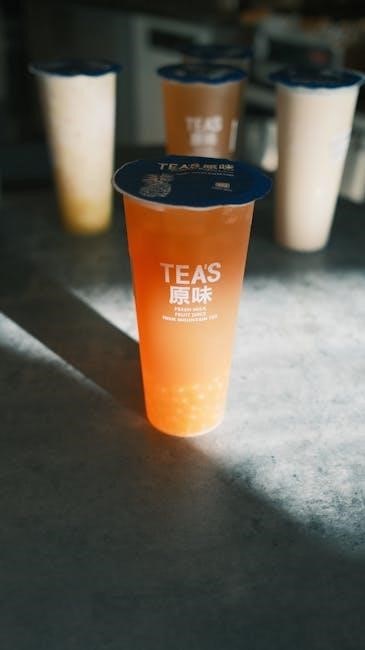
Brown Sugar Pearl Latte – Calorie Estimate
Determining the precise calorie count for a Kung Fu Tea Brown Sugar Pearl Latte is difficult without an official nutrition PDF. However, estimations can be made based on component analysis. A medium size, factoring in the milk tea base and brown sugar-coated boba, likely contains between 400-600 calories.
The brown sugar syrup significantly increases the carbohydrate content, contributing to a higher calorie density. The boba pearls themselves add approximately 100-200 calories depending on the portion size. Without a detailed PDF breakdown, these figures remain estimates.
Consider reducing sweetness or boba quantity to lower the calorie impact of this popular drink!
Boba (Tapioca Pearls) – Nutritional Impact
Tapioca pearls, commonly known as boba, contribute significantly to the calorie and carbohydrate content of Kung Fu Tea beverages. Unfortunately, a detailed nutrition PDF from Kung Fu Tea doesn’t specifically isolate boba’s nutritional value. However, estimations reveal a substantial impact.
Typically, a serving of boba (around ¼ cup) contains approximately 100-200 calories, primarily from carbohydrates. These carbs are largely simple sugars, offering minimal nutritional benefit. Boba also lacks significant fiber, protein, or essential vitamins and minerals.
While enjoyable, boba should be consumed in moderation as part of a balanced diet. Reducing the quantity or opting for alternative toppings can help minimize its nutritional impact.
Portion Control & Calorie Savings
Kung Fu Tea’s size options—small, medium, and large—directly impact calorie intake; choosing a medium saves 30-40% compared to a large, per the PDF.
Small, Medium, & Large Size Comparisons
Kung Fu Tea’s beverage sizing significantly influences the overall nutritional impact of your drink, and while a comprehensive Kung Fu Tea nutrition PDF isn’t widely available, understanding these differences is crucial.
Generally, the progression from small to large equates to a proportional increase in calories, carbohydrates, fats, and sugars. Opting for a smaller size, particularly the small or medium, is a practical strategy for reducing calorie consumption without sacrificing the enjoyment of your chosen beverage.
The information suggests a medium size can save you approximately 30-40 percent of the calories found in a large, offering a substantial reduction. This makes the medium a smart choice for those mindful of their intake. While specific calorie counts vary depending on the drink and customizations, this principle consistently applies across the menu.
Consider this when reviewing any available third-party nutritional information or attempting to estimate based on ingredient lists, as portion size is a key determinant.
Strategies for Reducing Calorie Intake
Navigating Kung Fu Tea’s menu while maintaining dietary goals requires mindful choices, even without a dedicated Kung Fu Tea nutrition PDF. Reducing sweetness levels is a primary strategy; requesting less sugar significantly lowers the calorie count of your drink.
Selecting dairy or non-dairy milk alternatives can also impact calorie intake, as different options have varying fat and sugar content. Prioritizing hot tea options over blended or milk tea varieties inherently reduces calories, offering a lighter alternative.
Carefully consider toppings – boba, jelly, and pudding add substantial calories. Minimizing or omitting these additions can create a significant difference. Choosing smaller sizes, as previously discussed, is another effective tactic.
Ultimately, informed customization and portion control are key to enjoying Kung Fu Tea responsibly.
Kung Fu Tea Nutrition Resources & Guides
Kung Fu Tea offers a Ginger Tea Preparation Guide as a PDF, while comprehensive official nutrition PDFs are limited; explore third-party apps.
Availability of Official Kung Fu Tea Nutrition PDFs
Kung Fu Tea’s official website currently lacks a readily accessible, comprehensive nutrition PDF detailing the caloric and macronutrient breakdown for its entire menu. While a Ginger Tea Preparation Guide is available in PDF format, focusing on home brewing, detailed nutritional information for in-store purchases remains scarce directly from the source.
Consumers seeking specific data often rely on third-party nutrition databases and apps to estimate calorie counts and ingredient profiles. These resources compile information from various sources, but their accuracy can vary. The absence of an official PDF makes precise tracking challenging.
It’s important to note that Kung Fu Tea’s extensive customization options – sweetness levels, milk choices, and toppings – significantly impact the nutritional value of each drink, further complicating the creation of a standardized nutrition guide. Therefore, relying on estimations and mindful customization is crucial for health-conscious consumers.
Third-Party Nutrition Databases & Apps
Given the limited availability of official Kung Fu Tea nutrition PDFs, several third-party databases and mobile applications offer estimated nutritional information for their beverages. These platforms, like MyFitnessPal and similar calorie-tracking apps, compile user-submitted data and estimations based on ingredient lists. However, it’s crucial to approach this information with caution, as accuracy can fluctuate.
These resources often provide calorie counts, macronutrient breakdowns (carbs, fats, proteins), and sugar content for popular Kung Fu Tea drinks, including milk teas and fruit-infused options. Users can search for specific beverages or similar items to approximate nutritional values.
Remember that customizations – sweetness levels, milk types, and toppings like boba – aren’t always accurately reflected in these databases, necessitating manual adjustments for personalized tracking. Always cross-reference information and prioritize mindful consumption.
Ginger Tea Preparation Guide (PDF Resource)

Kung Fu Tea offers a downloadable Ginger Tea Preparation Guide in PDF format, a valuable resource for those seeking a lower-calorie alternative and greater control over ingredients. While not a comprehensive Kung Fu Tea nutrition PDF for all beverages, it empowers consumers to create a healthier option at home.
This guide details the process of brewing ginger tea, allowing individuals to adjust sweetness and avoid added sugars commonly found in pre-made drinks. It promotes mindful consumption by highlighting the benefits of ginger and providing a transparent recipe.
Although it doesn’t cover the nutritional profile of all Kung Fu Tea offerings, understanding the base ingredients and preparation methods fosters informed choices and supports overall dietary goals. Accessing this PDF is a proactive step towards healthier indulgence.
Healthy Alternatives & Smart Choices at Kung Fu Tea
Kung Fu Tea’s hot tea options, alongside the Ginger Tea Preparation Guide PDF, provide lower-calorie choices for health-conscious consumers seeking mindful indulgence.
Hot Tea Options as Lower-Calorie Alternatives
Kung Fu Tea presents a spectrum of hot tea choices, offering significantly fewer calories compared to their milk tea counterparts, making them ideal for those prioritizing nutritional balance.
Plain teas, like Oolong or Green Tea, typically range from a mere 5 to 30 calories, a stark contrast to the 173-552 calories found in many flavored milk tea beverages.
Leveraging the Ginger Tea Preparation Guide PDF, customers can even recreate these lower-calorie options at home, controlling ingredients and sweetness levels.
Choosing hot tea allows enjoyment of Kung Fu Tea’s flavors without the substantial caloric impact of added milk, sugars, and toppings.
This simple switch represents a proactive step towards mindful consumption and supports overall dietary goals, proving that indulgence doesn’t necessitate compromising health.
Customizing Drinks for Optimal Nutrition
Kung Fu Tea empowers customers to tailor their beverages, significantly impacting the nutritional profile, even without a dedicated Kung Fu Tea nutrition PDF.
Reducing sweetness levels is paramount; opting for 0% or 25% sugar drastically lowers calorie intake, transforming a high-sugar drink into a more mindful choice.
Selecting non-dairy milk alternatives, like almond or soy milk, can reduce fat content and calories compared to traditional dairy options.
Careful consideration of toppings is crucial; minimizing or eliminating boba, jelly, and pudding saves substantial calories and carbohydrates.
Utilizing the knowledge gleaned from available nutritional information, customers can proactively build a drink aligned with their health objectives, enjoying flavor responsibly.
Balancing Indulgence with Overall Dietary Goals
Enjoying Kung Fu Tea doesn’t necessitate abandoning dietary goals; mindful consumption is key, despite the absence of a comprehensive Kung Fu Tea nutrition PDF.
Treating a Kung Fu Tea beverage as an occasional indulgence, rather than a daily habit, helps maintain a balanced lifestyle.
Pairing your drink with a nutritious meal or snack can mitigate the impact of added sugars and calories.
Prioritizing hydration with water throughout the day supports overall health and can reduce cravings for sugary drinks.
Remember, understanding portion sizes – choosing small or medium over large – significantly impacts calorie intake, allowing for guilt-free enjoyment.
Ultimately, integrating Kung Fu Tea into a healthy lifestyle requires awareness and moderation.